The ROI Timeline for AI Agents in Self-Storage
The AI Agent ROI timeline for your Business. This article discusses in depth about The AI Agent Learning Curve and what to expect when implementing AI agents in general. The same timeline can be used for any industry. The Implementation Learning Curve- What to Expect. AI agents are like humans who set in your business and get better with experience, if trained, they can become your best employee and your best asset.
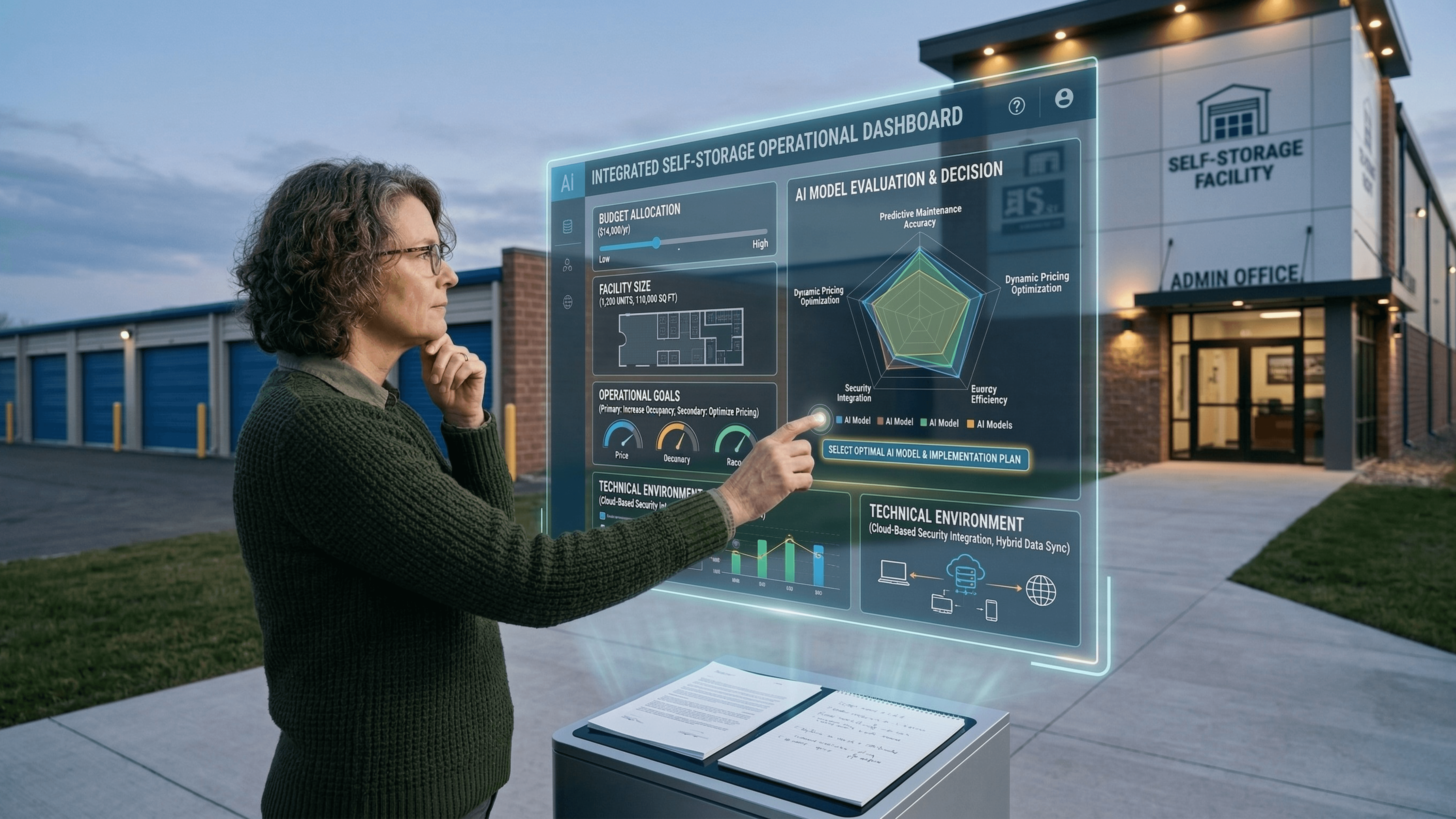
The Implementation Learning Curve: What to Expect
One of the most common concerns storage operators have is: "This sounds complicated. How hard is this to implement and manage?"
The answer varies significantly between chatbots and AI agents, and may surprise you.
The Chatbot Learning Curve (Steeper Than You'd Think)
Initial setup: 2-4 weeks for a basic implementation
Requires mapping all possible conversation paths
Writing scripts for each scenario
Creating decision trees for common questions
Integrating with your website or messaging platforms
Testing every possible pathway
Ongoing maintenance: 5-10 hours per month minimum
Manually updating scripts when policies change
Adding new pathways for questions the chatbot can't handle
Analyzing failure points where customers get stuck
Rewriting flows based on customer feedback
Technical requirements: Moderate
May need developer help for initial setup
Requires someone with workflow logic understanding
Often needs IT involvement for system integrations
The hidden challenge: The better your chatbot, the more complex it becomes to maintain. Every new scenario requires careful scripting to avoid breaking existing flows.
The AI Agent Learning Curve (Easier Than Expected)
Initial setup: 1-2 weeks for modern platforms like EasyBee
Upload or link to your existing documentation (website, FAQs, policy documents)
Connect to your property management system (1500+ integrations available)
Configure basic settings (hours, contact info, brand voice)
The agent learns from your content rather than requiring manual scripting
Ongoing maintenance: 30-60 minutes per month
Review conversation transcripts for continuous improvement
Add new information as services or policies change
Adjust agent tone or priorities based on performance data
The agent adapts to changes automatically through its connection to your systems
Technical requirements: Minimal
No-code deployment for modern AI agent platforms
Most integrations are plug-and-play with popular property management systems
Updates typically require no technical skills
The advantage: AI agents get smarter over time with minimal human input. Rather than building and maintaining scripts, you're training an intelligent system that generalizes knowledge and applies it to new situations.
The Reality Check: Month-by-Month Progression
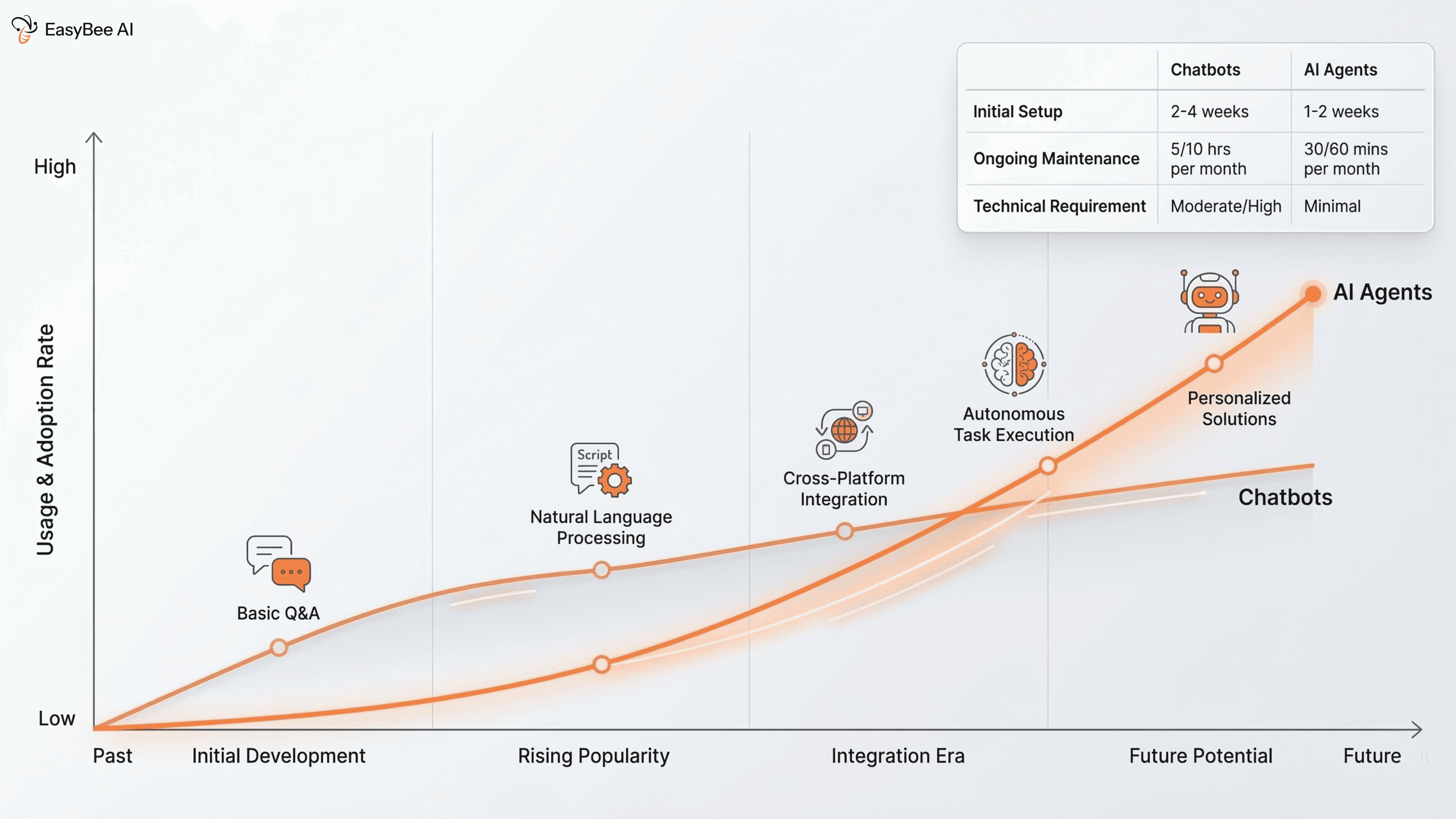
Month 1: Initial learning period
AI agent handles 60-70% of inquiries successfully
Staff monitors conversations and provides occasional guidance
System learns your facility's terminology, common questions, and brand voice
Quick wins: after-hours coverage, basic FAQs, appointment scheduling
Month 2-3: Rapid capability expansion
Success rate increases to 75-85% as the agent learns from interactions
More complex scenarios handled autonomously
Integration with PMS enables transaction capabilities
Staff burden noticeably reduces
Month 4-6: Optimization and fine-tuning
Agent becomes increasingly proactive
Identifies patterns in customer questions that might indicate website or process improvements
Develops "personality" consistent with your brand
ROI becomes clearly measurable through increased bookings and reduced staffing needs
Month 6+: Mature deployment
Agent is a fully integrated team member
Handles most routine interactions autonomously
Staff focuses on exceptions and high-value activities
Continuous improvement becomes passive—the system learns without active training
Making the Decision: A Framework for Self-Storage Operators

How do you decide which approach is right for your facility? Consider these factors:
Budget Considerations
Chatbots: $50-500/month depending on features and complexity
Lower upfront cost
Higher ongoing maintenance costs (staff time)
Limited ROI due to low resolution rates
AI Agents: $200-2,500/month depending on capabilities and scale
Higher upfront investment
Lower maintenance costs
Higher ROI through increased bookings and reduced staffing needs
The calculation: An AI agent that captures even 2-3 additional rentals per month typically pays for itself. Industry data suggests facilities recover 15-25% of previously lost bookings, which for most operators represents thousands of dollars monthly.
Facility Size and Complexity
1-3 Locations:
AI agent makes sense for 24/7 coverage without expanding staff
Single implementation serves all locations
Particularly valuable if operating with minimal on-site staff
4-15 Locations:
AI agent becomes essential for consistent brand experience
Centralized management across portfolio
Significant staff cost savings through automation
16+ Locations:
AI agent is table stakes for competitive operations
Corporate-level oversight with location-specific customization
Integration with enterprise PMS is critical
Operational Goals
If your priority is: Cost reduction and basic coverage
Either solution could work, though AI agents deliver better long-term value
If your priority is: Revenue growth and competitive advantage
AI agents are clearly superior due to higher conversion rates
If your priority is: Customer experience and brand differentiation
Only AI agents provide the natural, helpful interactions that create positive impressions
Technical Environment
Legacy systems with limited integration options:
Start with web-based AI agent for customer-facing interactions
Add voice capabilities as budget allows
Modern cloud-based PMS (SiteLink, Storable, 6Storage, etc.):
Full AI agent implementation with deep integration
Leverage existing API connections for seamless operation
Multiple disconnected systems:
AI agent can serve as integration layer, unifying customer experience even when backend systems are fragmented
The Path Forward: Hybrid Intelligence
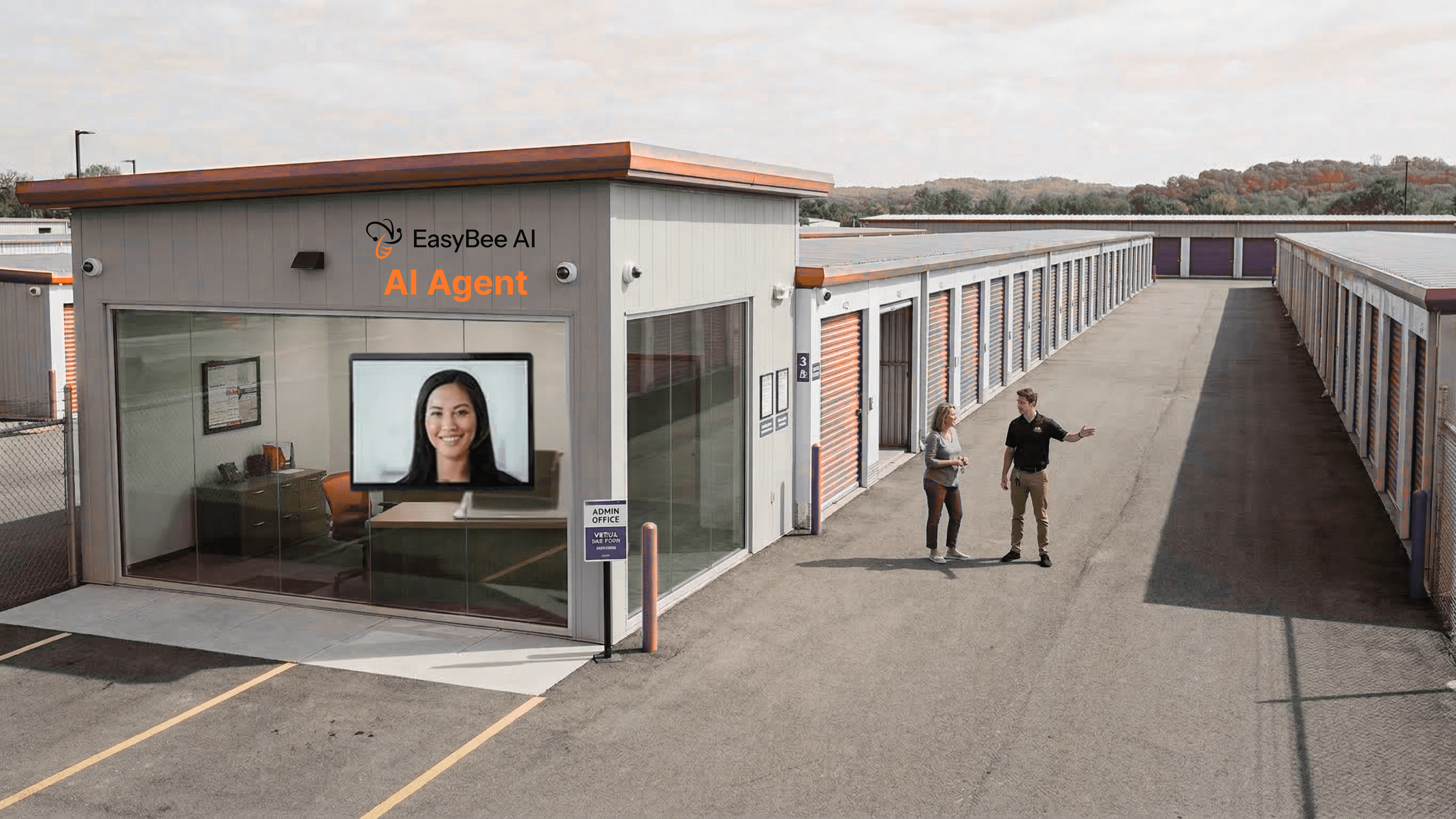
Here's what forward-thinking operators are discovering: the future isn't about replacing humans with AI—it's about creating a complementary system where each handles what they do best.
AI Agents should handle:
Routine inquiries (hours, pricing, availability)
After-hours customer support
Multi-step processes (digital check-in, payment processing)
Initial lead qualification
Appointment scheduling
Basic troubleshooting (gate codes, access issues)
Humans should focus on:
Complex problem-solving requiring judgment
Emotionally charged situations (complaints, disputes)
Sales conversations with high-value prospects
Physical facility management and maintenance
Community relationship building
Strategic decisions about operations and marketing
This division of labor allows your staff to operate at their highest value while ensuring customers receive instant, accurate support whenever they need it.