
Top 10 Things to Do in 2026 to Elevate Your Self Storage Business
The self-storage industry is at a pivotal moment. After the boom years of the early 2020s, the market has stabilized, but the competitive landscape has fundamentally changed.

The self-storage industry is at a pivotal moment. After the boom years of the early 2020s, the market has stabilized, but the competitive landscape has fundamentally changed.
Technology has lowered barriers to entry while simultaneously raising customer expectations.
This creates a new baseline that all operators must meet to thrive, whether you’re managing facilities in California, Texas, Florida, New York, or anywhere across the United States and Canada.
As we move through 2026, the winners won’t necessarily be those with the most capital or the largest portfolios.
They will be the operators who combine operational excellence with smart technology deployment. Here are the top 10 actions you should take this year to elevate your business and stay ahead of the competition.
1. Implement AI-Powered Customer Communication and AI Conversational Agent
Data shows that operators using AI agents are handling 80% of frequently asked questions without human intervention. This leads to significant staff efficiency while expanding portfolios.
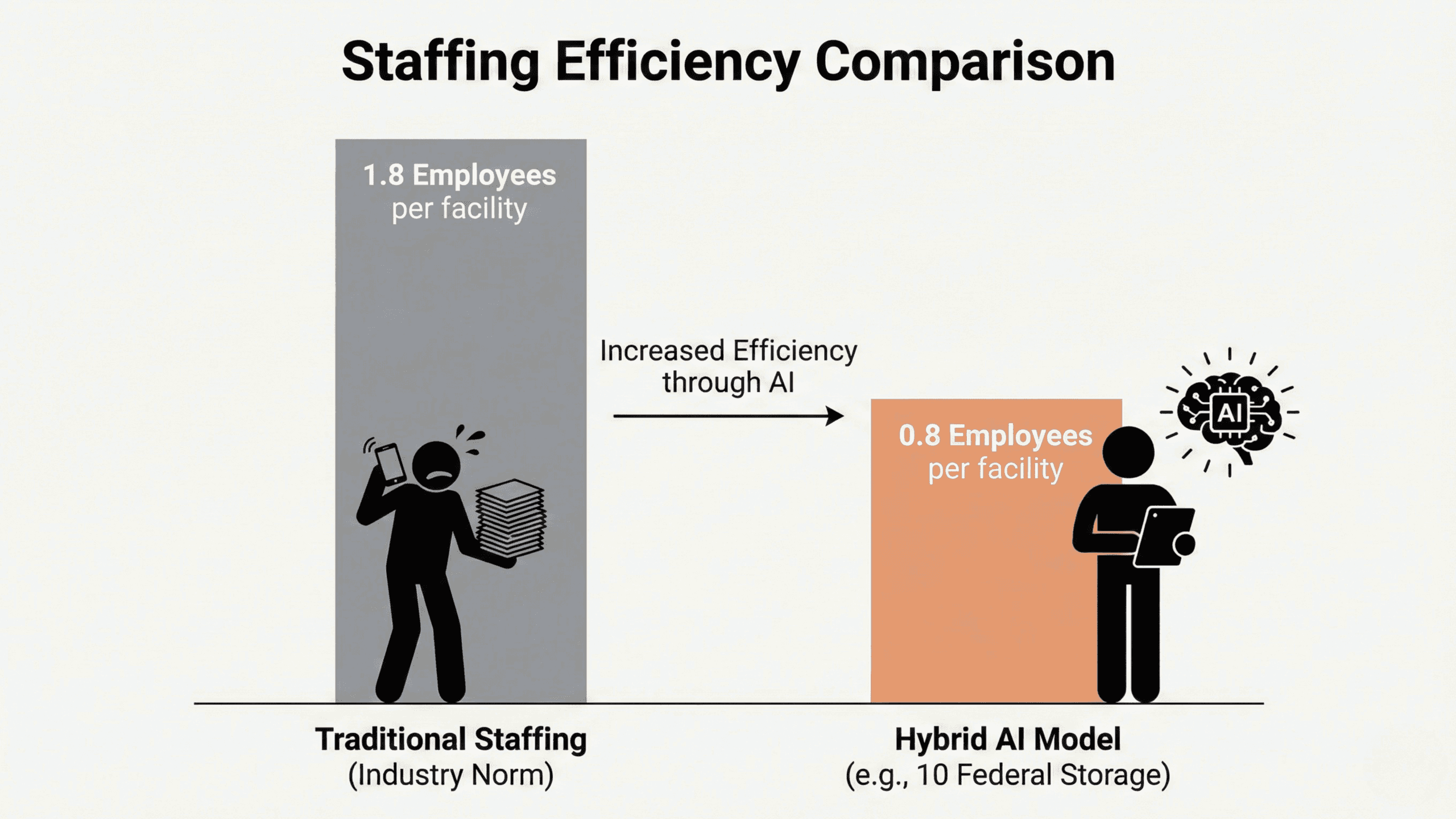
Companies like 10 Federal Storage in Raleigh, North Carolina, have achieved an employees-per-facility ratio of just 0.8 (compared to the industry norm of 1.8-2.0) through AI adoption. This isn’t about replacing your team—it’s about amplifying their effectiveness.
Recommended Tools & Platforms
Easybee AI: The leading AI voice and chat agent built specifically for self-storage. It handles after-hours calls, checks availability, and books units directly into your management software.
Storable’s AI Tools: Integrated AI features within the Storable platform ecosystem (but a heavy deployment cycle).
General AI (ChatGPT / Claude / Gemini): Can be customized with storage-specific knowledge for general inquiries (but very fragile and breakable models).
Action Steps
Deploy a specialized AI Conversational Agent: Train it on self-storage terminology to handle after-hours inquiries, gate code requests, and unit size questions.
Deflect Routine Calls: Use AI to handle basic queries, allowing staff to focus on high-value interactions requiring empathy.
PMS Integration: Ensure your AI connects to your management software for real-time availability and pricing.
2. Adopt Dynamic Revenue Management Software
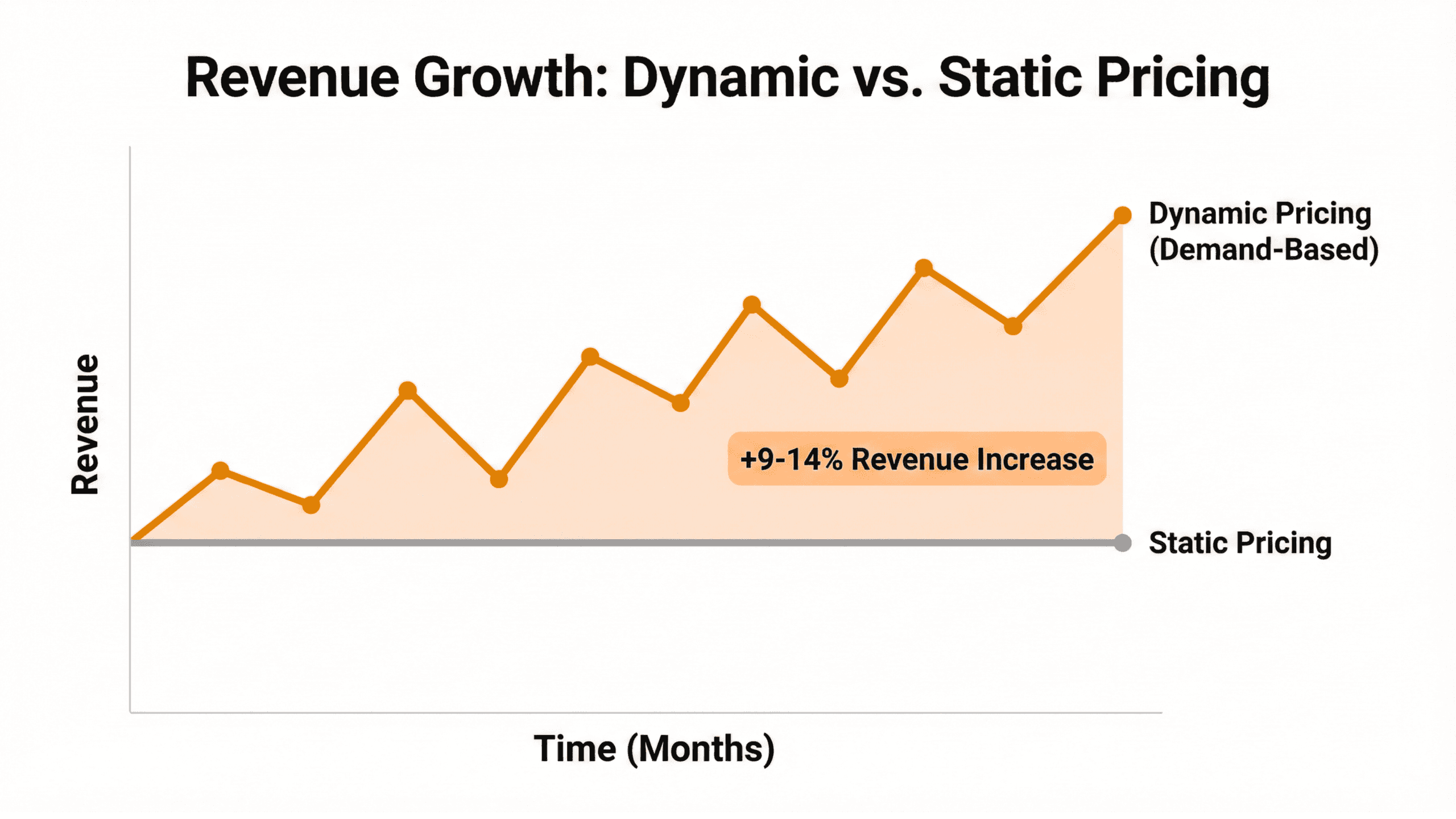
If you are still setting prices based on gut instinct or simply matching competitor rates, you are leaving money on the table. Revenue management systems can increase revenue by 9-14% through demand forecasting and algorithmic pricing optimization.
Recommended Revenue Management Platforms
Veritec Revenue Management System (VRMS): Cloud-based solution used by major REITs like StorageMart. Known for its “Value Pricing” technology.
Prorize Self Storage Revenue Optimizer (SSRO): AI-based revenue management focusing on maximum revenue capture.
PMS Modules: Utilize the built-in revenue tools in SiteLink, StorEdge, or 6Storage (Not very specialized).
Action Steps
Integrate & Automate: Set up a system compatible with your PMS (SiteLink, Storable, Domico, etc.).
Review Cadence: Schedule pricing reviews 1-2 times monthly, but allow the software to make micro-adjustments daily based on demand signals.
Track RevPASF: Move beyond occupancy rates; monitor Revenue Per Available Square Foot as your key performance metric.
3. Reshape Customer Acquisition and Lead Gen
Customer acquisition remains a top priority, but the funnel has changed. Customers now begin their search through aggregators (SpareFoot), AI tools (Gemini, ChatGPT), and “Near Me” searches, often never reaching your home page until they are ready to buy.
Lead Generation Channels & Tools
Aggregators: SpareFoot, Neighbor.com, and Storage.com.
Marketing & SEO: Storagely (websites with rental guarantees), Storage Pug, and CallRail (for tracking phone leads).
Paid Search: Google Local Services Ads, Google Ads, and Adverank.
Action Steps
Capture Intent Early: Use embedded forms on comparison portals to capture leads before they visit your site.
Optimize for LLMs: Invest in SEO that targets AI answers, ensuring your facility details are accurate on high-authority platforms.
Speed to Lead: Implement fast follow-ups. Responding to a lead in under 5 minutes drastically increases conversion rates.
4. Build a Retention-First Culture
Keeping existing customers costs far less than acquiring new ones. Forward-thinking operators in 2026 are redefining retention as a revenue strategy, not just a service function.
Retention & Communication Tools
CRM Platforms: Easybee AI (integrates with your softwares), Storable CRM, or customized HubSpot/Mailchimp workflows.
Communication: CallPotential, Twilio (SMS API), and SiteLink SMS features.
Action Steps
Automated Check-ins: Send messages at 30, 60, and 90 days post-move-in to address issues early.
Win-Back Campaigns: Target previous customers who moved out on good terms with incentives to return (many return within 12-24 months).
Segmented Communication: Target students for summer storage, businesses for tax-season document storage, and families for seasonal transitions.
5. Upgrade Security Technology
Modern security is a dual-purpose investment: it protects your asset and serves as a powerful marketing differentiator. Upgrades can also reduce insurance premiums by 10-20%.
Security Systems
Cloud-Based AI Cameras:
Verkada: Premium AI features (facial recognition, analytics).
Rhombus Systems: Affordable cloud-managed cameras with IoT sensors.
Access Control:
Nokē Smart Entry (Janus): Keyless, app-based entry.
PTI Security Systems: The industry standard for gate access.
Remote Monitoring: Services like Blue Eye or Solink for real-time crime prevention.
Action Steps
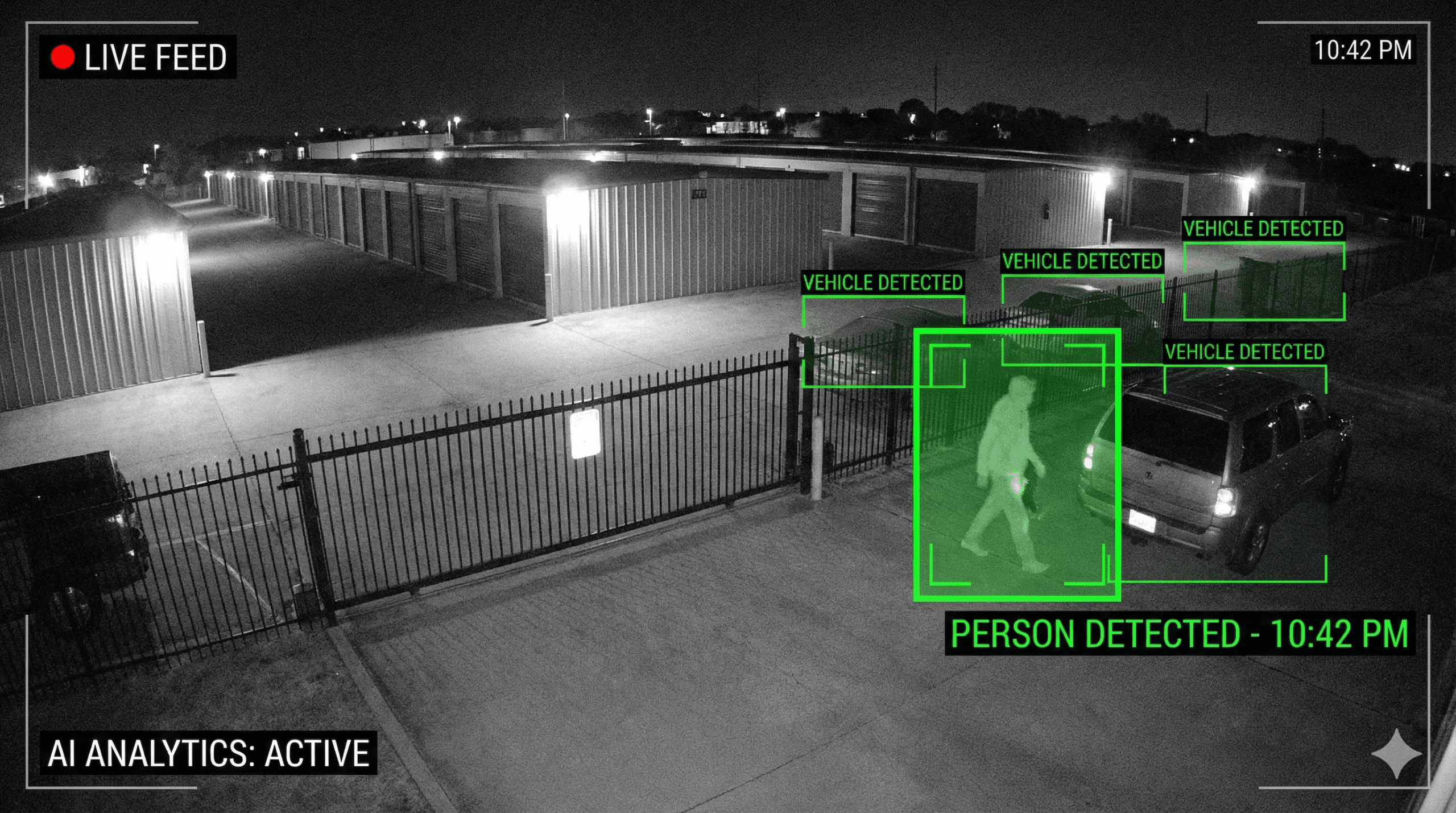
AI Surveillance: Deploy cameras that distinguish between normal tenant activity and loitering or suspicious vehicles.
Go Keyless: Implement Bluetooth/app-based entry to eliminate physical gate codes.
Market Your Tech: Prominently advertise “24/7 AI Surveillance” and “App-Based Access” on your website.
6. Deploy Value-Based and Tiered Pricing
Not all 10×10 units are created equal. Units near elevators, on the ground floor, or with drive-up access should command premium prices.
Action Steps
Audit Your Facility: Identify premium units based on location (near entrance/elevator), access (drive-up), and features (lighting, extra height).
Implement Tiers: Create 3-5 pricing tiers per unit size in your management software.
Train Staff: Teach your team to sell the value difference.
Script: “This unit is $10 more because it’s right next to the loading dock, saving you hours of walking back and forth.”
7. Invest in Specialty Storage Niches
With housing costs high and lifestyle changes accelerating, demand for specialty storage is surging. These segments often command rental rates 2-3x higher than standard units.
Niche Opportunities
Vehicle Storage: RV, boat, and classic car storage (covered and uncovered).
Commercial/Business: Inventory storage, document archiving, and contractor equipment.
Amenities: Wash stations, power hookups (110V/220V), and package acceptance lockers.
Action Steps
Assess Local Demand: Check Google Trends for “RV storage near [City]” to gauge market need.
Target Businesses: Create landing pages specifically for commercial clients, highlighting 24/7 access and deliveries.
8. Master Local SEO and “AI Search” Presence
In 2026, visibility equals revenue. Renters are skipping traditional websites and asking their phones or AI assistants for recommendations.
Essential SEO Tools
Websites: Storagely, Storage Pug, or Storable Websites.
Analytics: Google Analytics 4, Google Search Console, Ahrefs, and BrightLocal.
Listings: Google Business Profile (formerly GMB).
Action Steps
Google Business Profile: This is your digital storefront. Ensure hours, photos, and services are 100% accurate. Respond to every review.
Hyper-Local Landing Pages: Create pages for specific neighborhoods (e.g., “Self Storage near University of Texas”).
Prepare for Voice/AI Search: Use schema markup so search engines and AI bots clearly understand your pricing, location, and hours.
9. Get Your Legal and Compliance House in Order
Regulatory pressures are increasing. From state-level rent control discussions to strict changes in lien laws (like Maryland’s 2025 updates), compliance is critical.
Resources
Legal Networks: Self Storage Legal Network (via SSA).
Auction Platforms: StorageTreasures, Lockerfox.
State Associations: Join your local SSA affiliate (Texas, California, Florida, etc.) for state-specific lease templates.
Action Steps
Audit Contracts: Review rental agreements and lien notices annually.
Abandoned Property: Have a clear protocol for tires, hazardous materials, and vehicles, which often require different disposal methods than standard goods.
Join the SSA: An annual membership is cheaper than a single consultation with a lawyer after a mistake is made.
10. Balance Automation with Human Touch
The goal of technology in 2026 isn’t to remove humans, it’s to remove robotic tasks from humans.
The Hybrid Staffing Model
Traditional: 1.8–2.0 employees per facility.
Hybrid: 1.0–1.2 employees + Automation.
Unmanned: 0 staff + Remote Management + Kiosks.
Action Steps
Automate Low-Value Tasks: Payments, basic FAQs, gate code resets, and lease signing should be digital.
Elevate High-Value Tasks: Focus staff on sales, solving complex billing disputes, facility maintenance, and building community relationships.
Hire for Tech-Savviness: Look for managers who are comfortable operating unified cloud platforms.
The Bottom Line: Smart Operations Win in 2026
The post-boom market has separated operators into two camps: those adapting to the new competitive baseline and those falling behind.
The operators who will thrive in 2026 are those who combine technology with expertise, automation with personal service, and data-driven decisions with old-fashioned customer care. Start with one or two of these initiatives this quarter. By year-end, you will have transformed your operation from reactive to proactive.
The future of self-storage is here. Are you ready to lead it?